


Should You Leave Doors Open or Closed When the AC Is On
A room can feel stuffy and warm even when the thermostat says the house is cool. One common reason is simple: the air cannot move the way the system was designed to move it.
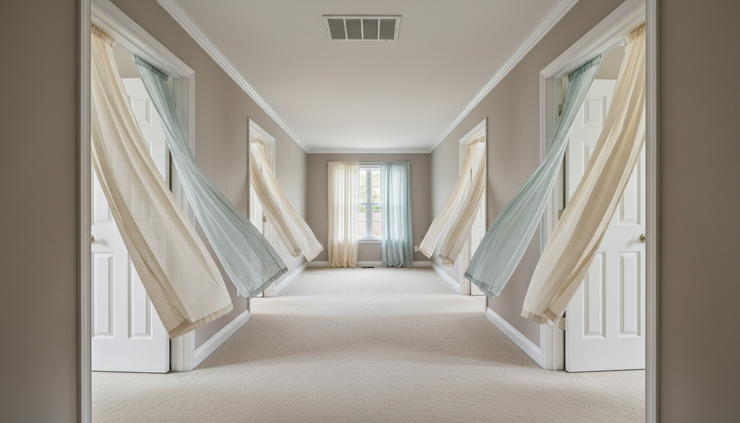
For most homes with a standard central air system, the best answer is this: leave interior doors open, or at least cracked, when the AC is running. That helps supply air get back to the return vent, keeps pressure more balanced, and makes temperatures more even from room to room.
There are exceptions. A zoned system, a ductless mini-split, or a room with its own return vent may work fine with the door closed. But in a typical house with one central return, shutting rooms off often makes comfort worse, not better.
The simple rule for most homes
If your house has central air and one main thermostat, open interior rooms usually work best.
Central air does not just push cold air into rooms. It also needs air to flow back to the return grille. The return is often in a hallway, living room, or central part of the house. When a bedroom door is closed, the supply vent may keep pushing cooled air into that room, but the air has a harder time getting back to the return.
That creates a pressure problem.
The room with the closed door can become slightly pressurized. The main part of the house can become slightly depressurized. That pressure difference may pull warm air in from places you do not want, such as:
Gaps around exterior doors
Attic access points
Crawl spaces
Wall cavities
Leaky ductwork
Unconditioned garages, if connected poorly
This is one reason a closed bedroom can feel cold while the hallway feels warm, or the opposite. The system is running, but the house is not sharing air evenly.
Best everyday setting: keep bedroom and office doors open when comfort matters across the whole house. If privacy is needed, leave the door open a few inches when possible.
Why closed rooms can make the AC work harder
It seems logical to close off a room you are not using. Less space to cool should mean lower energy use, right?
In many central AC systems, that logic backfires.
Your cooling system was sized and installed to move a certain amount of air through the whole duct system. When you close off rooms, especially several rooms, you can raise pressure inside the ducts. That can reduce airflow across the indoor coil and through the rest of the house.
Low airflow can lead to several problems:
Longer cooling cycles
Uneven temperatures
Higher indoor humidity
More duct leakage
Noisy vents
Extra strain on the blower motor
In some cases, coil freezing
This does not mean closing one door for a short time will damage the system. It usually will not. The issue is using closed rooms as a daily cooling strategy, especially while also closing supply vents.
The better approach is to let the system breathe.
If a room is too cold or too warm, the fix is usually not to seal it off. The fix is to improve airflow balance, check the return path, inspect the ductwork, or adjust the system.

When it is fine to close a door
There are times when closing a room is reasonable. The key question is whether air still has a proper return path.
A closed door may be fine if the room has:
Its own return air grille
A transfer grille above the door
A jump duct that connects air back to the hallway
A large undercut gap below the door
A dedicated zone with its own thermostat
A ductless mini-split serving that room
In those cases, the room is not fully cut off from the airflow loop. Air can enter, leave, and balance more easily.
A room with a ductless mini-split is different from a standard central air room. The indoor unit conditions that space directly. Closing the door can help that room hold temperature, as long as the unit is sized correctly and the rest of the house has its own cooling plan.
A zoned central system is also different. If your home has motorized dampers and multiple thermostats, closing certain areas may be part of how the setup is meant to work. Even then, the system still needs proper airflow. Good zoning includes ways to manage pressure, not just block air.
What about unused rooms
Unused rooms are where many people get tempted to close everything.
Maybe it is a guest room, storage room, hobby room, or spare bedroom. It feels wasteful to cool space no one is using. The instinct makes sense. The result may not.
For a typical central air system, do not close the supply vent completely and shut the door for long periods. That can make the airflow problem worse.
A more balanced setup is usually better:
Keep the vent open or only slightly adjusted
Keep the door open or cracked
Close blinds or curtains during hot afternoons
Reduce heat sources in the room
Seal obvious air leaks around windows
Make sure the return path is not blocked
If the room gets intense sun, window treatments may help more than closing the door. White or light-colored blinds, lined curtains, cellular shades, or exterior shading can reduce heat gain without choking the air system.
For a room that is rarely used, you can partially close the door for privacy or noise control. Just avoid turning it into a sealed box with a closed vent, closed door, and no return path.
The thermostat only reads one area
Another reason open rooms help is that the thermostat measures temperature in one spot.
If your thermostat is in the hallway or living room, it does not know what is happening in a closed bedroom. It only reacts to the temperature around itself.
This can create strange comfort issues.
If closed rooms trap cool air, the central area may stay warmer. The thermostat keeps calling for cooling, so the system runs longer. The closed rooms get colder, while the thermostat area finally catches up.
The opposite can also happen. If a closed sunny bedroom gets hot and the thermostat area is cool, the system may shut off before that bedroom gets comfortable.
Open interior airflow helps the thermostat get a more honest picture of the house. It will never read every room perfectly, but balanced airflow narrows the gap.
If one room is always hotter than the rest of the house, look for common causes:
The room faces west or south and gets strong sun
The duct run to that room is long or leaky
The supply register is blocked by furniture
The return path is weak
Attic insulation is thin above the room
The window leaks air or heat
The room sits over a garage or unconditioned space
Closing the room rarely solves those root problems.

Bathroom, laundry room, and kitchen doors deserve special mention
Not every room plays the same role in comfort and humidity.
Bathrooms can add a lot of moisture after showers. During and right after a shower, run the exhaust fan if you have one. Keep it running long enough to clear steam from mirrors and surfaces. After that, leaving the door open can help the rest of the system manage lingering humidity.
Laundry rooms can add heat from dryers and moisture from damp clothes. If the dryer is running, make sure it vents outdoors properly. A laundry room door can stay closed for noise, but do not let the room become extremely hot and humid if it shares air with the rest of the house.
Kitchens add heat from ovens, cooktops, dishwashers, and sunlight. Running a range hood that vents outdoors can help when cooking. If the kitchen has supply vents and open connections to the rest of the home, the AC can recover more easily after cooking.
The goal is not to keep every interior door wide open all day. The goal is to avoid cutting off airflow in rooms that need to stay connected to the return side of the system.
Do not confuse interior doors with exterior doors
Interior airflow is good. Outdoor air leaks are not.
When the AC is on, exterior doors and windows should stay closed unless you are intentionally airing out the house during mild weather. Hot outdoor air brings heat and moisture inside. In many parts of the U.S., humidity is just as much of a problem as temperature.
If the system has to remove extra moisture all day, comfort drops. The house may feel clammy even at a lower thermostat setting.
Pay attention to:
Gaps around exterior door frames
Worn weatherstripping
Loose door sweeps
Unlatched windows
Pet doors that leak air
Attic hatches without a good seal
A well-sealed house gives your cooling system a fair chance. Open pathways inside the house help air circulate. Closed pathways to the outdoors help keep heat and humidity out.
How to test what works in your house
Every home has different ductwork, room sizes, sun exposure, and return placement. A simple home test can show whether closed rooms are causing problems.
Try this on a warm day when the system is running normally.
Start with all interior room doors open
Let the system run for at least one full cooling cycle. Notice which rooms feel comfortable and which do not.
Check temperature differences
Use a basic room thermometer if you have one. A small difference between rooms is normal. Large swings suggest airflow or insulation issues.
Close one bedroom door
Wait 20 to 30 minutes. Then check whether the room feels pressurized, stuffy, or unusually cold. Also check whether the hallway feels warmer.
Feel around the door gap
If air pushes strongly under or around the door, the room may not have enough return airflow with the door closed.
Listen to the vents
Whistling, rushing, or louder airflow after closing rooms can point to pressure changes.
Open the door again
If comfort improves quickly, that room likely needs a better return path before it can stay closed comfortably.
A tissue test can also help. Hold a tissue near the bottom of a closed door while the system runs. If it moves strongly, air pressure is trying to find a path out of the room.
This is not a professional diagnostic test, but it can reveal a lot.
What to do if you need privacy or quiet
People close rooms for good reasons. Sleep, work, guests, pets, sound control, and privacy all matter. If you need to keep a room closed often, you still have options.
A few practical fixes can help air move without leaving the door wide open:
Install a transfer grille between the room and hallway
Add a jump duct through the attic, if appropriate
Increase the undercut at the bottom of the door
Add a dedicated return grille
Use a quiet fan to mix air between rooms
Have a technician check duct sizing and airflow
Some fixes are simple. Others need a qualified HVAC professional, especially anything involving ducts, returns, or pressure balancing.
Avoid cutting random holes or blocking fire-rated areas without knowing local code and safety rules. Airflow matters, but so do smoke movement, sound, privacy, and building requirements.

The best setting for comfort and efficiency
For a typical U.S. home with central AC, the best routine is simple:
Keep interior doors open when possible
Keep supply vents open
Keep return grilles clear
Keep exterior windows and doors closed
Use blinds, curtains, and shading to reduce heat gain
Change air filters on schedule
Get airflow problems checked if one room is always uncomfortable
If you have a zoned system, ductless mini-splits, or dedicated returns in each room, closed doors may be fine. The system design matters.
But if your home has one thermostat, one main return, and standard ductwork, open rooms usually give the system the airflow it needs. That means steadier temperatures, better humidity control, and less strain on the equipment.
The short answer: leave interior rooms open or slightly cracked when the AC is on, unless your system was designed to handle closed rooms. Keep the outdoors sealed out, let indoor air move freely, and your house will usually feel more comfortable without forcing the system to fight itself.


