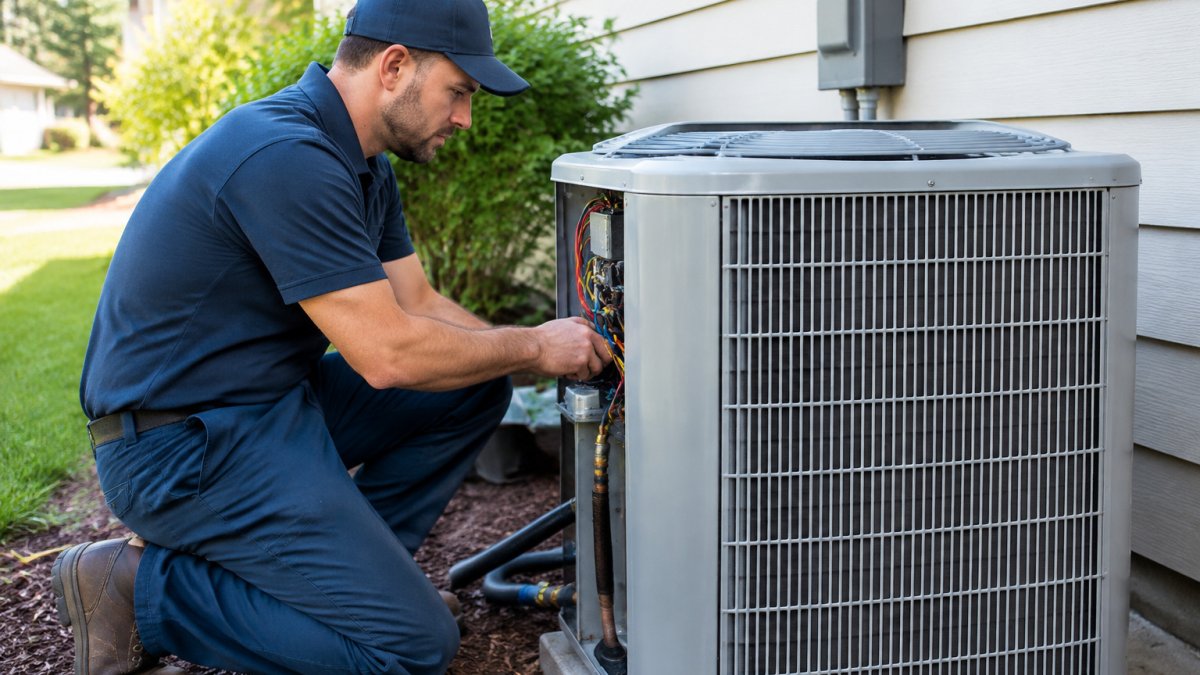
How to Understand Emergency HVAC Repair Cost Factors
Last Updated: November 19, 2026
Quick Summary
Emergency HVAC repair cost factors come down to five things: when you call, what equipment failed, how old it is, which parts are needed, and how complex the fix is. The after-hours premium pays for a technician who drops everything, a dispatch system that runs around the clock, and higher wages for work outside normal hours. Ask about daytime and after-hours labor rates and any minimum charge before you book.
An after-hours bill can include a dispatch fee, overtime labor rate, diagnostic charge, parts, and permit or disposal fees.
Ask what the after-hours dispatch fee is and whether it is waived if you approve the repair.
Set your own maximum authorization limit so the bill cannot grow past what you expected.
A quoted starting-at after-hours rate may exclude the dispatch fee and diagnostic, so ask for the all-in figure.
A genuine emergency means no heat in freezing weather, a gas smell, or water where it should not be.
Heat out and not sure who to call?
Adams offers 24/7 emergency HVAC service with clear, upfront estimates.
Table of Contents
What Drives Emergency HVAC Repair Cost Factors
An emergency HVAC repair cost factors breakdown usually comes down to five things: when you call, what equipment failed, how old it is, which parts are needed, and how complex the fix is. Heating and cooling calls across Wisconsin and Northern Illinois are shaped by those five items, and they explain most bills.
The timing question matters most. Timing matters. A failed furnace at 2 a.m. in January can cost more than the same failure on a Tuesday morning, even when the repair itself is identical. Below, we walk through each factor so you can look at an estimate and understand where the money goes.
Emergency HVAC repair pricing is not random. It follows a pattern, and once you see the pattern, you can predict roughly what a call will involve before anyone arrives.
Emergency HVAC Service Cost: What the Premium Actually Covers
The emergency HVAC service cost premium pays for three things: a technician who drops everything and drives to you, a dispatch system that runs around the clock, and the higher wage owed to someone working outside normal hours. That is the honest answer, but it is not a number you can budget against. To do that, you need to see how the pieces stack and how to confirm them before a truck leaves the shop.
Running a 24/7 dispatch desk, keeping trucks stocked, and paying overtime all carry real costs. What varies is how each company packages those costs, and that packaging is where estimates diverge.
An after-hours bill can include the following items, depending on the call:
A base service-call or dispatch fee to get a truck to your door
An overtime or after-hours labor rate, higher than the daytime rate
A diagnostic charge to find the fault
Parts, marked up modestly over cost
Any permit or disposal fee, if the job needs one
The repair itself, say a failed capacitor or a bad ignitor, may involve the same parts whether it is noon or midnight. The labor around it does not. Ask about the daytime and after-hours labor rates and any minimum charge, since those figures are the part of the bill homeowners most often fail to ask about.
How the premium stacks into a real bill
Consider how a no-heat call at 11 p.m. in January might be billed in general: a dispatch fee, an after-hours diagnostic charge, overtime labor, the replacement part, and possibly a shop-supply or trip line. Timing, not the hardware, is often what drives the premium.
That is why two companies can quote the same repair and land at different totals. Some bundle the diagnostic into the labor, others charge it separately, and some waive the dispatch fee when you approve the repair. You cannot compare quotes unless you ask.
Verify the premium before you book
You can pin down the after-hours premium in a two-minute phone call. Ask these questions in this order and write down the answers:
"What is your after-hours dispatch or service-call fee, and is it waived if I approve the repair?"
"What is your after-hours hourly rate, and what is the minimum charge?"
"Is the diagnostic fee separate from the labor, or credited toward the repair?"
"Do you charge overtime for weekends and holidays at a different rate than weeknights?"
"Is there a cancellation fee if I decline the repair after you arrive?"
"What is the maximum I can authorize before you need to call me back?"
That last question matters more than most people realize. A technician who can authorize work up to a set dollar amount without checking back is convenient, but it also means the bill can grow past what you expected. Set the authorization limit yourself, in writing if the company offers a work authorization form.
Watch out: a quoted "starting at" after-hours rate may exclude the dispatch fee and the diagnostic, so the first number you hear can be below the final invoice. Ask for the all-in figure for a typical one-hour after-hours repair before you agree to dispatch.
What the premium does not cover
An after-hours call is generally about speed and availability rather than a different quality of repair. Ask any company to confirm in writing what warranty and workmanship terms apply to an emergency call. Clear documentation ensures that you are protected regardless of the specific conditions surrounding emergency AC repair services in your local area.
HVAC Service Cost per Hour: Labor Rates and Minimum Charges
HVAC service cost per hour is only part of the picture, because many companies also apply a minimum charge. Ask about any minimum before you book.
Labor rates can vary by region, by company size, and by whether the call is standard or after-hours. A few things can push the hourly number up or down:
Time of day. Nights, weekends, and holidays carry an overtime rate.
System type. A heat pump or a high-efficiency furnace takes more skill to diagnose than a basic unit.
Travel. A long drive to a rural address may add a trip charge.
Minimum charge. Many shops set a minimum billing time.
We recommend asking two questions on the phone: "What is your after-hours hourly rate?" and "Is there a minimum charge?" Those two answers give you a clearer picture than an advertised starting price.
Using an HVAC Repair Cost Calculator Without Getting Burned
An HVAC repair cost calculator is a rough planning tool, not a quote. Online calculators give you a ballpark based on averages, and averages hide the details that decide your actual bill.
Use a calculator for one purpose: to sanity-check a number before you agree to it. If a calculator suggests a range and your estimate lands far outside it, ask why. Sometimes the answer is legitimate, such as a hard-to-reach compressor.
What calculators usually miss:
Your system's age and condition
Whether the part is in stock or must be ordered
Local labor rates in your area
Whether the call is after-hours
Treat the calculator number as a starting point for a conversation, not a promise.
Reading a Residential HVAC Service Price List Line by Line
A residential HVAC service price list should separate fees from labor from parts. When a company hands you one flat number with no breakdown, you cannot tell what you are paying for. Ask for the itemized version. The fastest way to learn to read one is to see a realistic example, line by line, and then know which lines to question.
Here is how a transparent estimate reads:
Line Item | What It Covers | What to Check |
Service-call fee | Truck rolls to your door | Is it waived if you approve the repair? |
Diagnostic fee | Time to find the fault | Flat rate or hourly? |
Labor | Time on the repair | Standard or overtime rate? |
Parts | The failed component | Warranty on the part? |
Disposal/permit | Old part removal, permits | Charged only when needed? |
A clear estimate names each line. If a company will not break it down before the work starts, consider getting a second opinion.
A worked example, so you know what to look for
Consider an after-hours call for a furnace that will not ignite. The technician diagnoses a failed hot-surface ignitor and replaces it in under an hour. A transparent invoice for that kind of visit should show each charge on its own line, such as a dispatch fee, a diagnostic charge, labor, the part price, and any applicable sales tax.
The total is not the point. The point is that every dollar traces to a named line you can compare against the phone quote.
The lines homeowners most often miss
The diagnostic credit. Many companies credit the diagnostic fee toward the repair if you approve the work. Ask whether that credit appears on the invoice or is buried in the labor line.
The dispatch waiver. A dispatch fee that is waived on approval should show as a zeroed or credited line, not disappear silently.
The minimum-hour rule. If the repair took twenty minutes but you are billed an hour, the invoice should state the minimum charge explicitly.
Taxable versus non-taxable lines. Labor and parts may be taxed differently depending on where the work is performed, and the tax line should reflect that split.
The parts warranty. The invoice should name the warranty term on the part, not just the price.
Watch out: a "free estimate" that turns into a paid diagnostic once the technician arrives is a common surprise. Confirm in writing whether the diagnostic is free or credited toward the repair, and ask for that confirmation in the same message where you approve the work.
Compare two estimates on the same lines
When you have two estimates, do not compare the totals. Compare them line by line. Put the dispatch fee, diagnostic, labor rate, minimum hours, parts, and tax side by side. The lower total often hides a higher labor rate offset by a waived dispatch fee, or a lower parts price offset by a separate diagnostic charge.
A price list you can read is a price list you can trust. If a company's estimate survives this line-by-line check, you have a fair basis to approve the work.
When an Emergency Call Is Genuinely Necessary (and When It Isn't)
A genuine emergency means no heat in freezing weather, a gas smell, or water where it should not be. Everything else can usually wait for a standard appointment. That distinction can save you the after-hours premium.

Call right away if you notice:
A gas smell or a carbon monoxide alarm
No heat when outdoor temperatures are below freezing
Water leaking from the unit or pooling near it
A burning smell or sparks
The system running but blowing no air at all
You can safely check a few things first:
Confirm the thermostat is set to heat and the batteries are good
Check the circuit breaker for the furnace or air handler
Replace a clogged air filter
Make sure the outdoor unit is clear of snow or debris
If those checks do not fix it and the house is getting cold, call. If it is a mild day and the system is just noisy, book a regular visit and skip the emergency fee.
How to Avoid Emergency Fees Through Preventive Maintenance
Preventive maintenance is the cheapest way to avoid emergency fees, full stop. A tune-up in fall catches a failing capacitor or a dirty flame sensor before it strands you on a cold night. Routine care also keeps the system running efficiently, which is why we tell homeowners that regular air conditioner maintenance pays for itself over a season.
A simple maintenance rhythm:
Fall: furnace tune-up, filter change, safety check
Spring: AC tune-up, coil cleaning, refrigerant check
Monthly: swap the filter during heavy-use months
Annually: ask for a written condition report
Some companies offer service plans that bundle these visits. Ask what any plan covers before you sign. For local context on how systems perform in this climate, you can review heating and cooling solutions for the area.
Schedule Your Emergency HVAC Service with Adams
When the heat quits at the wrong moment, the last thing you want is a surprise on the bill. Adams provides 24/7 emergency service and is fully licensed and insured. The company has been family-owned for over 37 years.
You can review the range of HVAC services offered or confirm that Adams serves your community before you call. Either way, you will know what to expect.
A cold house at midnight is stressful enough without wondering what the repair will cost. Adams takes the guesswork out of it with upfront estimates, licensed technicians, and round-the-clock response.
Frequently Asked Questions
Is emergency HVAC more expensive than a regular service call?
Yes. Emergency HVAC service cost typically runs higher because of after-hours dispatch, overtime labor rates, and priority scheduling. Nights, weekends, and holidays can carry an emergency fee plus a higher overtime rate. The diagnostic or trip fee may also increase. Ask for the after-hours rate and any minimum charge before you approve the dispatch so the total bill holds no surprises.
What factors affect emergency HVAC repair cost the most?
Timing is the biggest swing factor: after-hours, weekend, and holiday calls carry premiums. Next come labor rates and minimum charges, then parts availability and cost. Repair complexity matters too, since a compressor or refrigerant recharge runs far more than a capacitor or thermostat swap. System age and condition influence whether a fix is straightforward or opens up related failures. Finally, local labor rates and your service area set the baseline for everything else.
What should an emergency HVAC repair estimate include?
A transparent estimate should itemize the service-call or diagnostic fee, the labor rate and estimated hours, the emergency or after-hours surcharge, and parts with their individual prices. Ask whether the diagnostic fee is credited toward the repair if you approve the work. Confirm any minimum charge and whether the quote is flat-rate or time-and-materials. Get the estimate in writing before work starts, and ask what happens if the technician finds a second problem mid-repair.
Is it cheaper to repair or replace an HVAC system after an emergency breakdown?
It depends on the age of the system, the repair cost relative to replacement, and how often it has failed. A common guideline is that if a repair costs a large share of a new system's price, or the unit is near the end of its expected life, replacement often wins on total out-of-pocket cost. Frequent repairs and rising energy bills also point toward replacement. Ask your technician for both numbers side by side before deciding.